Showing posts with label trial. Show all posts

Friday, November 29, 2013

Is That Plea Deal Really a Deal?


Prison is Hell for the guilty. It is difficult to envision what it must be like for the innocent. How and why do innocent people confess or plead guilty to crimes that they did not commit? In most instances, a defendant will be required to make a choice between a plea of guilty or not guilty. When pleading guilty a defendant is required to "allocute" before the judge -- admit the crime and furnish sufficient details to satisfy the court that he is indeed guilty. (One cannot help wonder how and by whom an innocent defendant is furnished with enough information about the crime to satisfy the court of his guilt.)

The defendant, frightened, most often poor, uneducated, a minority member is advised that a trial is likely to end with a conviction and a long sentence, whereas a plea will guarantee a much shorter sentence. Despite his protestations of innocence, the defendant seeks guidance frequently from an over-worked, underpaid defense lawyer who would much prefer a quick deal rather than a long drawn out trial. Of course, not all defense counsel fit that description.  An innocent person should NEVER plead guilty.

The reality is that without plea bargains the entire criminal justice system would come to a halt. Charges would be tried ten years after they were made. The only solution is vigilance by all those involved. The prosecutor, defense counsel and the court must be satisfied of the defendant's guilt before urging or accepting a plea. I recognize that there is no avenue to absolute certainty because the knowledge of guilt or innocence lies with the defendant, but all involved must strive to PROTECT the innocent -- even those who profess to be guilty.

If you believe you are innocent, hiring the right attorney can make all the difference.  Seek out an attorney who has trial experience and is not afraid of telling your story to a jury.  Your freedom may depend on this choice.


Monday, November 25, 2013

Miranda Warning

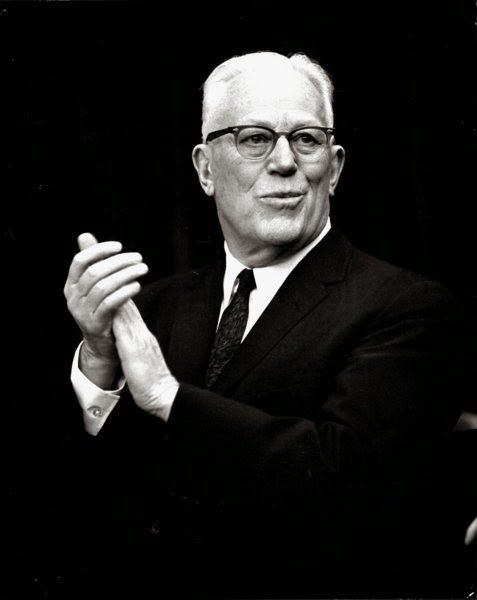
Chief Justice Earl Warren wrote the Miranda warning, which criminal suspects have been read since the U.S. Supreme Court mandated it in 1966. Above: Justice Warren led the Supreme Court from 1953 to 1969.

If you have ever watched a crime drama on television, you have probably seen the officer advise the suspect of his or her Miranda Rights. This warning is read after an arrest has been made and before police questioning is conducted.

The Miranda Warning says:
"You have the right to remain silent. Anything you say can and will be used against you in a court of law. You have the right to an attorney. If you cannot afford an attorney, one will be provided for you. Do you understand the rights I have just read to you? With these rights in mind, do you wish to speak with me?"

What does this mean?
·       You have the right to remain silent.
·       If you do say anything, what you say can be used against you in a court of law.
·       You have the right to consult with a lawyer and have that lawyer present during any questioning.
·       If you cannot afford a lawyer, one will be appointed for you if you so desire.
·       If you choose to talk to the police officer, you have the right to stop the interview at any time. (This part of the warning is usually omitted from the screenplay.)

Many people believe that if they are arrested and not "read their rights," they can escape punishment. Not true. Generally, if the police fail to read a suspect his or her Miranda rights, the prosecutor can't use anything the suspect says as evidence against the suspect at trial.  There are some exceptions to this protection, which is why your best bet is to remain SILENT when questioned by police.

Consequences of Failure to Provide Miranda Warning:
Without a Miranda warning, nothing a person says in response to a custodial questioning can be used as evidence against the person at his or her trial. In addition, under the "fruit of the poisonous tree" rule, if the police find evidence as a result of an interrogation that violates the Miranda rule, that evidence is also inadmissible at trial.

Example:
If a suspect tells the police where a weapon is hidden and it turns out that the suspect provided this information in response to improper questioning, the police will not be able to use the weapon as evidence -- unless the police can prove that they would have found the weapon without the suspect's statements.


Bottom Line:  Even though you have some protections under Miranda:  You should never speak to the police without an attorney present!!!

Monday, November 18, 2013

Do I Need a Lawyer When I'm Charged With a Crime?


Do I need a lawyer when charged with a crime?  The answer is “YES, YES, and YES!!”  Never walk into a courtroom alone!!  Being charged with a crime can be a terrifying and overwhelming experience that can change the course of your life forever.  Before you even have a chance to understand what’s happening, you could be forced to make critical decisions in a situation that you may know nothing about. Making the wrong decision during your case can have very serious implications that will follow you for the rest of your life. The severity of your circumstances can be determined only with the aid of an experienced criminal defense lawyer, and only after he or she is familiar with the facts of your case, and learns about you and your life.
Remember that under the law you are to be considered innocent throughout all the stages of your case.  Whether the matter is still under investigation, or you are facing arraignment, or your case has been set for trial, you need an experienced, aggressive, and determined defense lawyer.  You need a lawyer who has no one’s back but yours; someone who will stand by your side to protect your innocence, to ensure that you are treated fairly, and to see to it that that your rights are protected.