Showing posts with label legal advice. Show all posts

Monday, November 25, 2013

Miranda Warning

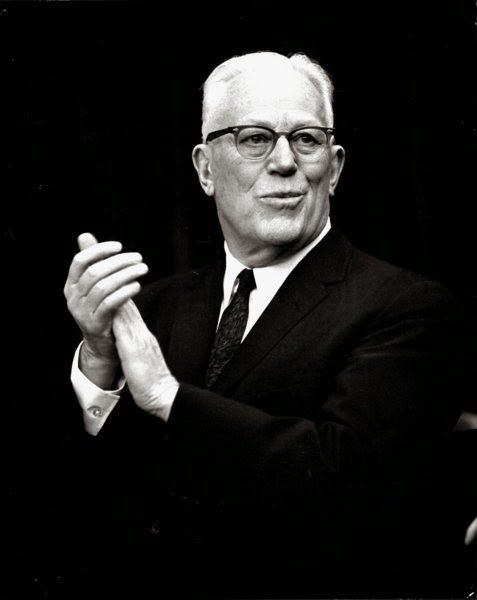
Chief Justice Earl Warren wrote the Miranda warning, which criminal suspects have been read since the U.S. Supreme Court mandated it in 1966. Above: Justice Warren led the Supreme Court from 1953 to 1969.

If you have ever watched a crime drama on television, you have probably seen the officer advise the suspect of his or her Miranda Rights. This warning is read after an arrest has been made and before police questioning is conducted.

The Miranda Warning says:
"You have the right to remain silent. Anything you say can and will be used against you in a court of law. You have the right to an attorney. If you cannot afford an attorney, one will be provided for you. Do you understand the rights I have just read to you? With these rights in mind, do you wish to speak with me?"

What does this mean?
·       You have the right to remain silent.
·       If you do say anything, what you say can be used against you in a court of law.
·       You have the right to consult with a lawyer and have that lawyer present during any questioning.
·       If you cannot afford a lawyer, one will be appointed for you if you so desire.
·       If you choose to talk to the police officer, you have the right to stop the interview at any time. (This part of the warning is usually omitted from the screenplay.)

Many people believe that if they are arrested and not "read their rights," they can escape punishment. Not true. Generally, if the police fail to read a suspect his or her Miranda rights, the prosecutor can't use anything the suspect says as evidence against the suspect at trial.  There are some exceptions to this protection, which is why your best bet is to remain SILENT when questioned by police.

Consequences of Failure to Provide Miranda Warning:
Without a Miranda warning, nothing a person says in response to a custodial questioning can be used as evidence against the person at his or her trial. In addition, under the "fruit of the poisonous tree" rule, if the police find evidence as a result of an interrogation that violates the Miranda rule, that evidence is also inadmissible at trial.

Example:
If a suspect tells the police where a weapon is hidden and it turns out that the suspect provided this information in response to improper questioning, the police will not be able to use the weapon as evidence -- unless the police can prove that they would have found the weapon without the suspect's statements.


Bottom Line:  Even though you have some protections under Miranda:  You should never speak to the police without an attorney present!!!

Tuesday, November 19, 2013

What Exactly is Disorderly Conduct?


What EXACTLY is disorderly conduct? What type of behavior can lead to a person being charged with the crime of being “disorderly?”  I could give you a boring definition that disorderly conduct is a broad term describing conduct that disturbs the peace or endangers the morals, health, or safety of a community. Let’s instead analyze this topic by taking an example out of the pages of  US Weekly, and People magazine. 

Reese Witherspoon, the Oscar-winning actress and her husband, Hollywood agent Jim Toth, were recently pulled over because an officer noticed that their car wasn’t staying in its lane.  The officer noticed that Toth had droopy eyelids, watery, bloodshot eyes, and his breath smelled strongly of alcohol. So he did what any officer would do: a sobriety test.

According to reports, Witherspoon called out to the officer: “Do you know my name? You’re about to find out who I am and you’re about to be on national news.”  She was told to get back in the car.  She initially complied with the officer’s request. After the “Walk the Line” test, Witherspoon got out of the vehicle a second time.  The trooper said that he warned her that she would be arrested if she left the car again. As the test continued, Witherspoon began to hang out of the window and say that she did not believe that he was a real police officer.

Toth was then placed under arrest.  He was charged with driving under the influence and failure to maintain the lane.

The reports said that at that point, Witherspoon got out and asked the trooper what was going on. After being told to return to the car, she “stated that she was a ‘US Citizen’ and that she was allowed to ‘stand on American ground.”

The trooper then began to arrest Witherspoon. The report says Witherspoon was resistant at first but was calmed down by her husband.  Toth and Witherspoon were then taken to jail and Witherspoon was charged with disorderly conduct. 

The elements of disorderly conduct vary from one jurisdiction to another. This is often a “go-to” charge when police are unsure what to do with a person they want to charge.  Most statutes specify the misconduct that constitutes the offense. Acts such as the use of vulgar and obscene language in a public place can be considered disorderly conduct. Here are a few more examples: a person who recklessly, knowingly or intentionally engages in fighting; a person who makes unreasonable noise and continues to do so even after being asked to stop; or a person who disrupts a lawful assembly of persons.  The list goes on and on…

While it may seem like a minor offense, an individual charged with disorderly conduct can face probation, fines, drug/alcohol testing, community service, and even JAIL.

If you have been accused of or charged with disorderly conduct, you should contact an experienced criminal defense attorney immediately!!


Thursday, November 14, 2013

When and How to Invoke Your Right to Silence


You have the right to remain silent…USE IT!
 
You decided to leave your house for a late night drive, the next thing you know, you look in the rearview mirror and you see flashing police lights. The officer walks up to you're vehicle, takes one look and tells you to step out of the car, your placed in handcuffs. The officer puts you into the back of the car and drives you to the police station. The officer tells you that you match the description of someone who robbed the house in the area of which you are driving. A detective comes up and takes you to a back room of a police station, puts a recorder on the table and says “Let’s hear your side of the story.” 

What do you do now?
Your freedom, your reputation, and your life depend on what you say in this moment.
 The next words out of your mouth should be “I wish to speak to my attorney.”
The right to silence is designed to protect the innocent. The police can and will stretch the truth and make promises to you that are not true.  For instance, they say you can get a lower bail amount if you co-operate. They may say your best friend is in the next room singing like a canary. They may even threaten your life. It is their job to get as much information out of you as possible.  Don’t give in to their pressure and please exercise your right to remain silent!

You should always exercise your right to silence until you have obtained proper legal advice, even if you believe you are guilty and especially if you believe you are not guilty.